
DENVER ELITE TRANSFERS
Private transfer service across Denver and Colorado mountain destinations. Focused on reliable airport pickups, long-distance routes, and comfortable travel in SUVs and Sprinters.
Context
Private transportation service operating across Denver and Colorado mountain destinations.
The project focused on improving booking conversion from paid traffic by reducing friction, clarifying service options, and optimizing the end-to-end booking experience.
My role
Product Designer
Team
Media Buyer
Webflow Developer
Timeline
Oct 2025 – Dec 2025 (2 Months)
As the UX Designer on the Denver Elite Transfers team, I…
Analyzed user behavior from paid traffic to identify early drop-off and hesitation points
Structured service and vehicle information to support faster comparison and clearer decision-making
Redesigned booking and quote flows to reduce friction and improve completion rates
Collaborated with developers to implement changes in Webflow
Iterated on designs based on usability validation and performance feedback
Goal
OBJECTIVE
Increase booking conversion after paid traffic by improving clarity, scanability, and speed of decision-making across the booking flow, with a strong focus on mobile users.
APPROACH
Streamlined the booking experience by clarifying the value proposition, structuring service information, and simplifying the booking form.
Focused on reducing early drop-off, speeding up progression to booking actions, and supporting confident completion from first interaction to request submission.

SOLUTIONS
PROBLEM
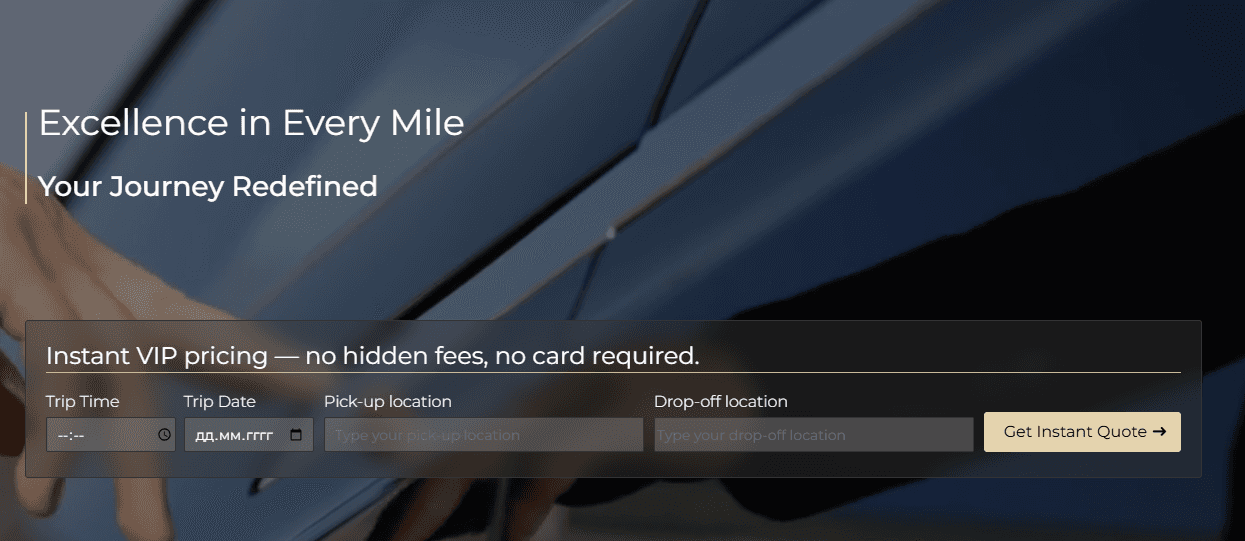
The booking entry point needed clearer messaging, visual focus, and a more direct path to action.
SOLUTION
Designed a focused hero section with a clear value message, strong visual hierarchy, and an in-context booking form that guides users directly into the booking flow.
Before

After
IMPACT
Improved conversion from ad click to booking initiation
Reduced early drop-off before the booking step
Faster user progression to the first booking action
METHOD
Comparative landing page testing focused on post-ad user behavior.
Users entered the page from a paid-traffic scenario and were asked to book a service.
Compared the original and redesigned versions based on booking initiation, early drop-off, and time to first booking action.
PROBLEM
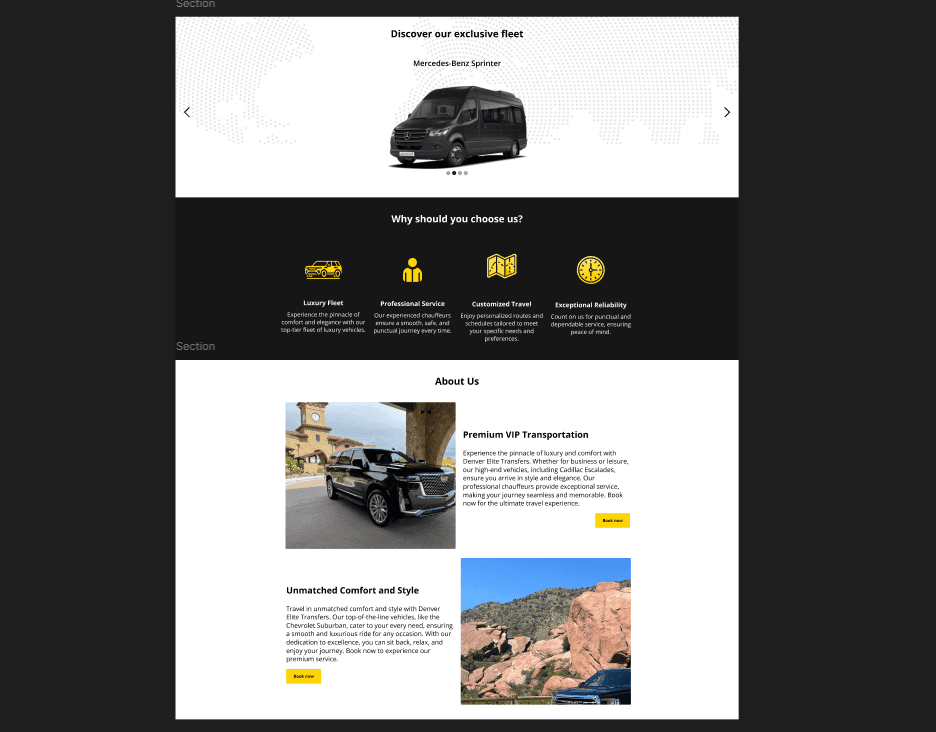
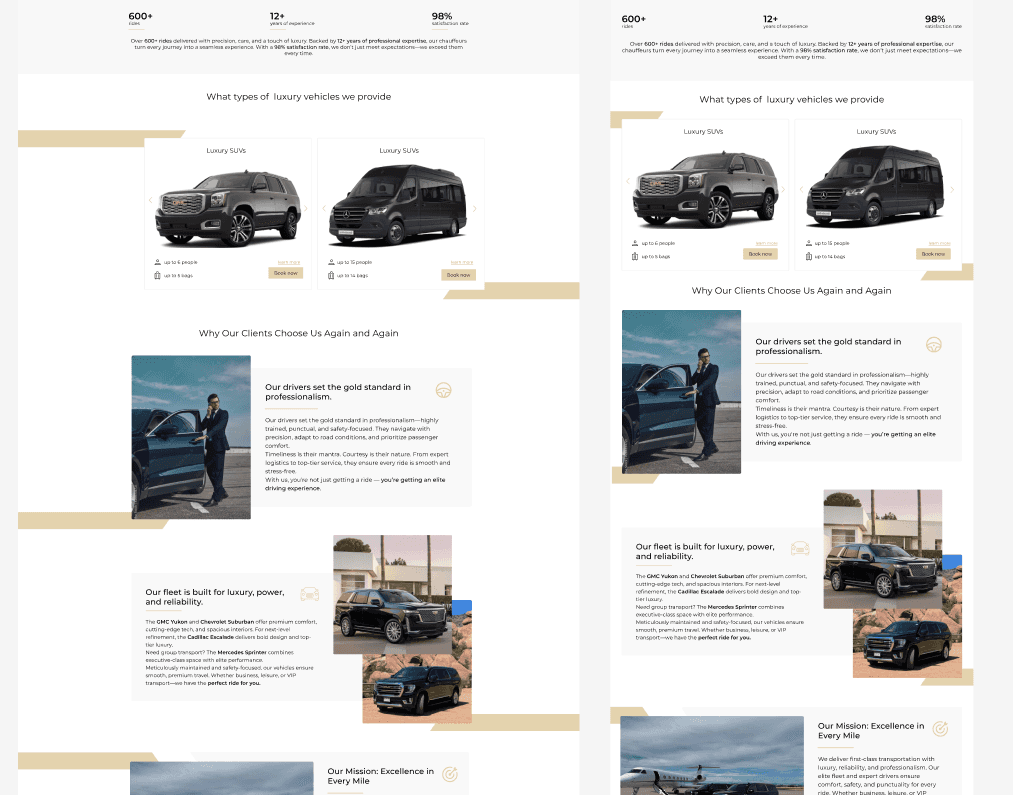
The service page needed a clearer structure to support natural scanning, comparison of vehicle options, and understanding of service value and trust signals.
SOLUTION
Designed a structured, scannable layout that groups service benefits, vehicle options, and trust signals into a calm, readable flow aligned with how users explore information.
Before
IMPACT
Users compared vehicle options more efficiently without excessive scrolling.
Key service benefits and trust signals were noticed earlier in the page flow.
More users reached booking-related actions after reviewing the service page, indicating clearer value communication.
METHOD
Comparative service-page testing focused on decision-making behavior.
Users were asked to review available vehicle options and decide whether to proceed with booking.
Compared the original and redesigned versions based on content scanning patterns, vehicle comparison behavior, and progression toward booking.
PROBLEM
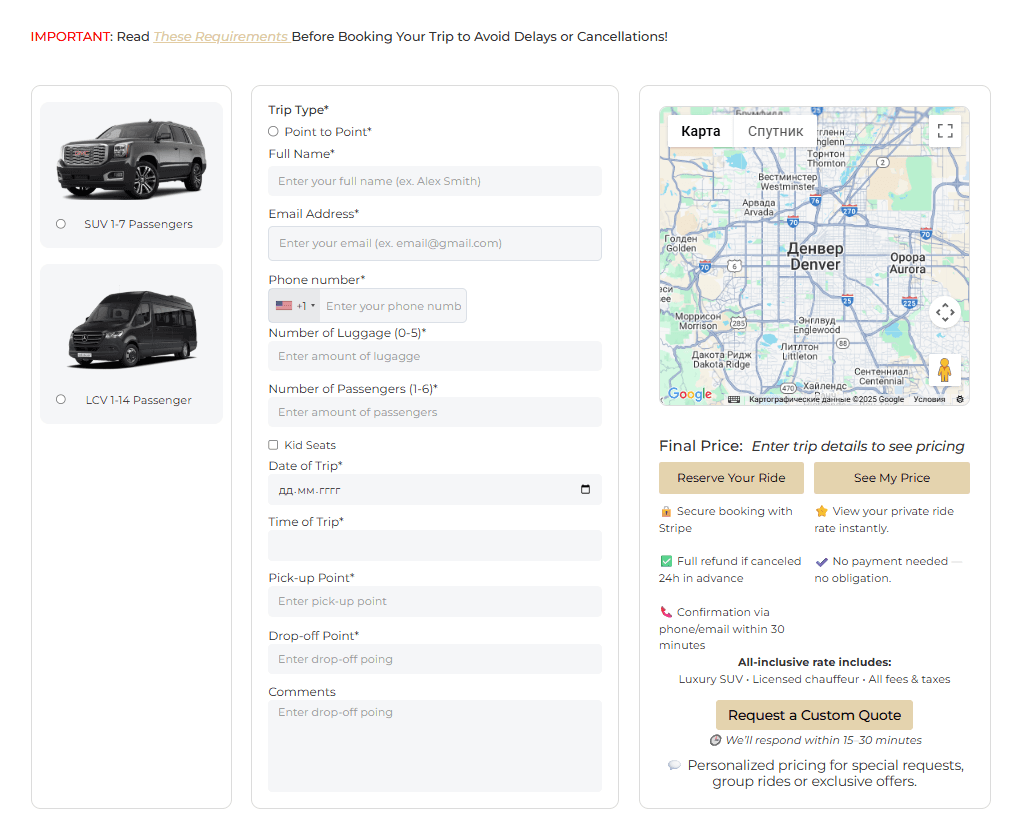
The booking form required a clearer structure to support easy scanning, navigation, and confident completion.
SOLUTION
Designed a structured booking form with clear grouping, consistent spacing, and readable field labeling to reduce cognitive load and support smooth, confident completion.
IMPACT
More users successfully completed the booking form without assistance.
Time to form completion was reduced due to clearer field grouping and scanability.
Fewer users hesitated or abandoned the form before submission, indicating lower friction during booking.
METHOD
Comparative booking-form testing focused on completion behavior.
Users were asked to complete a booking request from start to submission.
Compared the original and redesigned versions based on form completion rate, time to completion, field hesitation, and abandonment points.

Designing for Trust
Clear hierarchy, restrained visuals, and visible reassurance points support confidence from the first interaction.
Optimizing for Real Usage
Key actions were prioritized for mobile and time-sensitive behavior, keeping essential interactions immediately accessible.
Simplifying Information
Complex service details were structured into short, scannable blocks to support faster understanding and decision-making.
Working Within Constraints
Design decisions balanced clarity and flexibility while accommodating routing logic, pricing rules, and platform limitations.